- For Home...

-
-
-
-
- Get In Touch
Need a different solution?
We’re here to help!
- For Business...
-
-


- Get A Quote
Our team is here to help!
- Wholesale...
- Resources...
- About Us...


Need a different solution?
We’re here to help!


Our team is here to help!

For businesses running commercial fleets, fuel costs are both significant and unpredictable. Prices can swing 50 cents per gallon within weeks, turning a manageable expense into a budget crisis.
Consider the math: fuel typically represents 60% of total fleet operating costs. For a fleet consuming 10,000 gallons monthly, a 50-cent price increase adds $5,000 in unexpected expenses—potentially eliminating quarterly profits. The challenge isn’t just the cost itself, but the inability to predict and plan for it.
The good news? Understanding what drives price changes and implementing a few strategic approaches can transform fuel from an uncontrollable variable into a manageable expense. This article breaks down why gasoline prices fluctuate and what your business can do about it.

Think of gasoline pricing as a pie chart with four slices. According to the American Petroleum Institute, crude oil makes up about half of what you pay at the pump (50%). Refining that crude into usable gasoline accounts for a quarter (25%). Distribution and marketing take another 11%, and federal and state taxes make up the final 14%.
Why crude oil dominates your fuel costs: Because crude oil is the biggest slice, its price swings drive most of the volatility you see at the pump.When geopolitical tensions flare—like Ukraine’s ongoing attacks on Russian energy infrastructure or conflicts in the Middle East—markets react immediately. Buyers compete for available supply, and prices spike.
The refining bottleneck: Here’s a surprising fact: the United States hasn’t built a new refining facility since 1977. Recent closures of major refineries in Houston and Los Angeles are tightening supply even further. This matters because even when crude oil prices drop, you might not see the full benefit at the pump. Refining margins expand to absorb some of those savings, limiting your cost relief.
What to expect ahead: The U.S. Energy Information Administration forecasts gasoline prices will decrease by about 11 cents per gallon in 2025 and another 18 cents in 2026, driven by lower crude oil prices and more fuel-efficient vehicles. But remember—these are forecasts, not guarantees. A refinery outage, a geopolitical crisis, or an unexpected demand surge can quickly change the trajectory.
When fuel comprises 60% of fleet operating costs, price volatility doesn’t just affect the fuel line item—it threatens overall profitability, cash flow stability, and competitive positioning. Fleet operators typically work with profit margins between 2% and 10%, meaning a 5% reduction in fuel costs can increase net profitability by up to 2.5%. Conversely, unexpected price spikes of the same magnitude can eliminate quarterly profits entirely.
The challenges extend beyond direct costs. According to GM Financial Fleet, approximately 20% of annual fuel expenses represent avoidable waste from unnecessary premium fuel purchases, unauthorized transactions, and inefficient purchasing patterns. Budget unpredictability disrupts cash flow planning, making it difficult to commit to growth investments or competitive pricing strategies. Businesses that can’t pass fuel cost increases to customers face margin compression, while those that do risk losing price-sensitive accounts.
The administrative burden compounds these financial impacts. Fleet managers spend countless hours monitoring prices, timing purchases, and adjusting budgets—time that could be devoted to core business operations and strategic planning.

Fuel hedging transforms unpredictable fuel expenses into a fixed, budgetable cost, allowing businesses to focus on operations rather than constantly monitoring market movements. Companies can lock in fuel prices for periods ranging from one month to 30 months through various hedging instruments.
Call options, also known as caps or ceilings, represent the least risky hedge structure. These function like insurance policies—if prices rise above the cap price, the fleet receives payouts. If prices fall below the cap, the fleet pays only the premium and benefits from lower market prices.
Margin differential contracts offer another approach that’s particularly useful for businesses without on-site fuel storage. Rather than fixing the absolute price per gallon, these contracts lock in the margin (or markup) that your supplier charges above wholesale market prices. You still pay the fluctuating wholesale rate, but your supplier’s markup remains fixed. This provides partial price protection—you’re shielded from unpredictable supplier margin increases while maintaining some exposure to wholesale market movements. For businesses that want to hedge their supplier relationship risk without fully committing to fixed pricing, margin differential contracts create a middle ground.
Fixed-price contracts with fuel suppliers offer a simpler alternative to financial hedging instruments, providing budget certainty without the complexity of futures markets.
For fleets with suitable facilities and steady fuel consumption, bulk purchasing provides both cost savings and price stability by buying larger volumes at better rates. Commercial and wholesale purchasing typically offers lower per-gallon prices than retail stations while reducing exposure to daily price volatility.
On-site storage delivers additional benefits: predictable supply at your home base, reduced downtime from fuel stops, and elimination of fuel card fraud or unauthorized purchases. The approach requires infrastructure investment and works best for larger operations with consistent consumption patterns, but for the right fleet, wholesale buying transforms fuel from a variable retail expense into a planned wholesale purchase.
While you can’t control market prices, you can control how much fuel your fleet consumes. Driver behavior alone can impact fuel consumption by up to 30%, making efficiency initiatives one of the most powerful cost control tools available.
Telematics systems provide real-time visibility into fuel consumption patterns, enabling fleet managers to identify waste and implement targeted improvements. Route optimization reduces unnecessary mileage by avoiding traffic congestion and selecting fuel-efficient paths. Driver coaching programs address behaviors like excessive idling, aggressive acceleration, and speeding—factors that significantly reduce fuel economy.
Preventive maintenance ensures vehicles operate at peak efficiency. According to the National Highway Traffic Safety Administration, properly inflated tires alone can improve fuel efficiency by 0.6% to 3%. Even modest efficiency gains compound across large fleets—a 10% reduction in fuel consumption for a fleet spending $100,000 annually saves $10,000, which for a business with a 5% profit margin represents the equivalent of $200,000 in additional revenue.
Fleet fuel cards transform fuel purchasing from an administrative headache into a strategic advantage by providing granular visibility, purchase controls, and rebate opportunities. Major fuel card programs offer rebates of up to 6 cents per gallon, providing immediate cost relief.
Beyond rebates, fuel cards enable purchase controls that prevent unauthorized spending—you can set limits on transaction amounts, restrict purchases to fuel only (no convenience store items), and receive alerts for unusual activity. Real-time transaction tracking integrates with fleet management software, eliminating the need to manually process receipts and providing instant visibility into spending patterns.
Given that approximately 20% of fuel expenses represent avoidable waste, fuel cards with proper controls can recover significant costs while simplifying administration.
Effective fuel budgeting combines historical data analysis, market trend monitoring, and conservative forecasting to create resilient budgets that can absorb moderate price fluctuations without disrupting operations.
Start by tracking your fleet’s historical consumption patterns—understand seasonal variations, identify high-usage periods, and calculate cost per mile metrics. Monitor market trends through reliable sources like the EIA’s weekly fuel price reports and short-term energy outlooks, which provide professional forecasts and context for price movements.
Build contingency funds into your budget—a 5% to 10% buffer helps absorb unexpected price spikes without requiring budget revisions. Choose between incremental budgeting (adjusting last year’s numbers) or zero-based budgeting (justifying each expense from scratch), depending on your business needs. Review and adjust budgets regularly rather than treating them as static annual plans.
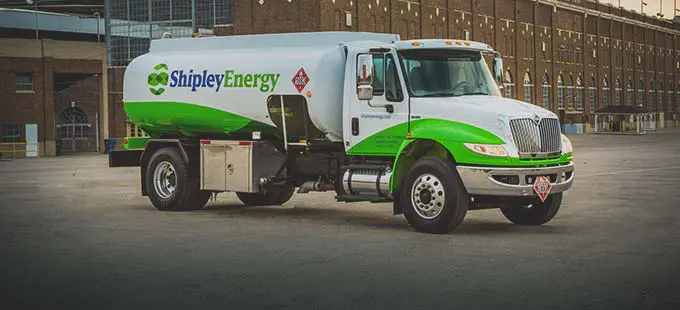
Shipley Energy partners with commercial fleets to provide stable fuel pricing solutions, combining decades of market expertise with flexible supply agreements designed to protect businesses from volatility.
Fixed-Price Contracts: Lock in gasoline rates for 3 to 12 months, eliminating price volatility from your budget equation. You gain certainty for planning and protection from market spikes, allowing you to focus on operations rather than fuel market monitoring.
CAP Price Programs: Protect your business from price increases while maintaining the ability to benefit when prices decrease. CAP programs set a ceiling on what you’ll pay, but if market prices drop below your cap, you pay the lower market rate—combining upside protection with downside flexibility.
Market Intelligence and Strategic Guidance: Shipley Energy’s commercial fuel advisors provide market analysis and price forecasting to help you make informed purchasing decisions. We monitor crude oil trends, refining dynamics, and geopolitical factors, translating complex market information into actionable guidance for your business.
For fleets with on-site storage, Shipley Energy offers commercial gasoline delivery with flexible scheduling to optimize purchasing timing. Our contract structures can be tailored to match your seasonal consumption patterns, ensuring your fuel program aligns with your business cycle.
Whether you operate a small service fleet or manage hundreds of vehicles, Shipley Energy’s transparent pricing and local service deliver the stability and predictability your business needs. Contact our commercial fuel team to discuss pricing strategies customized to your fleet’s consumption patterns and risk tolerance.
Gasoline price volatility stems from crude oil markets, refining constraints, and geopolitical events—forces beyond any single business’s control. However, the impact on your bottom line is entirely manageable through strategic procurement and operational efficiency.
Businesses that combine fixed-price contracts with efficiency initiatives and data-driven budgeting transform fuel costs from an unpredictable variable into a controlled expense. The key is moving from reactive price-chasing to proactive fuel cost management—implementing systems and partnerships that protect your budget regardless of market direction.
Contact Shipley Energy to explore pricing strategies that protect your budget from market volatility while maintaining the flexibility your business needs to compete and grow.