Is Your Heater Haunted? What Those Strange Noises Really Mean
Is Your Heater Haunted? What Those Strange Noises Really Mean
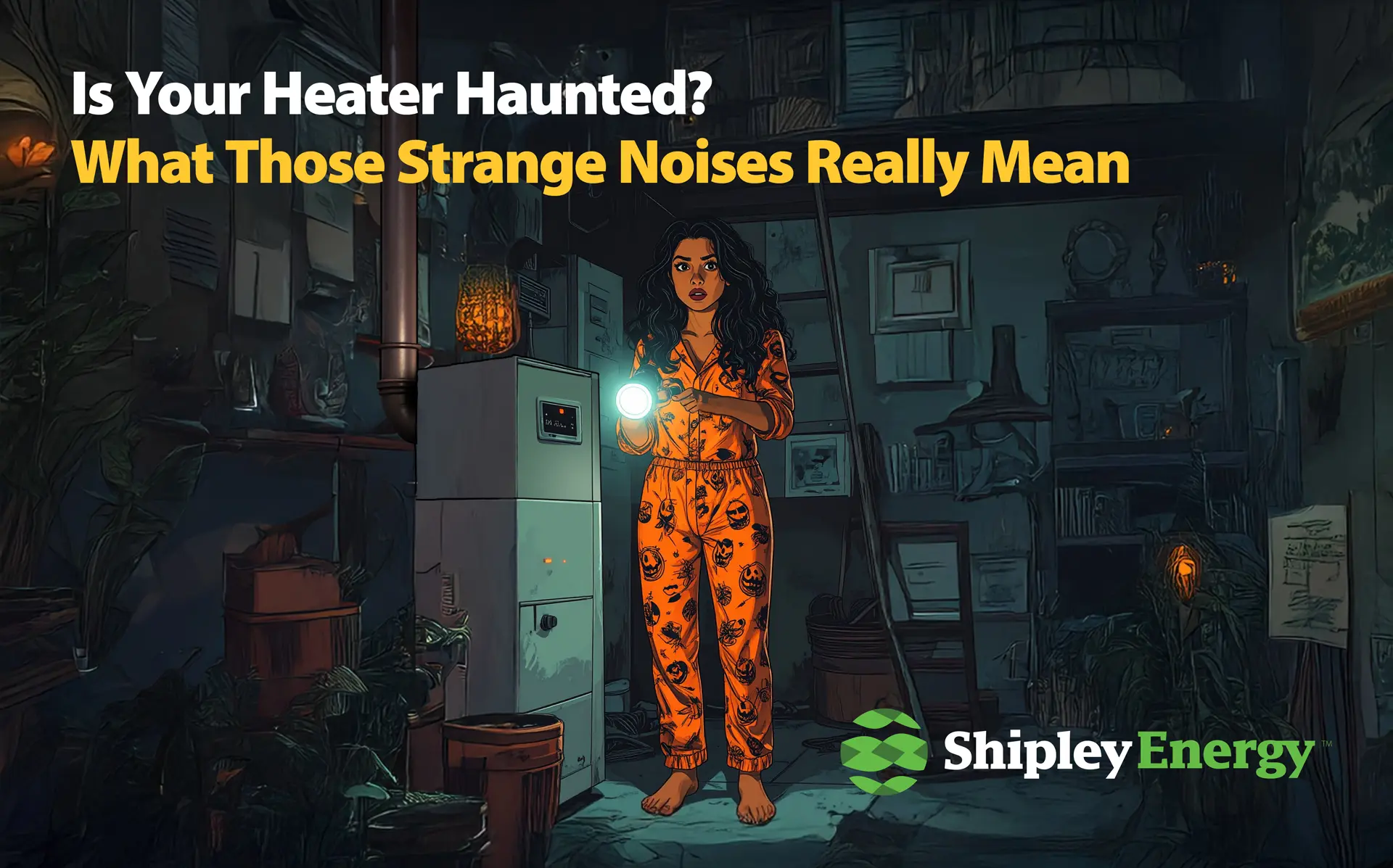
Halloween is the season of haunted houses, shrieks, screams, and ghostly whispers. But if you’ve been startled by strange sounds echoing through your home, chances are you don’t need an exorcist—you need an HVAC technician.
Let’s break down the most common sounds, what they mean, and how to tell the difference between a seasonal creak and a serious problem.
Spooky Noises from Your HVAC System That Could be a Serious Issue
1. Banging or Knocking
What’s happening: Loud bangs when your system starts up often come from expanding ducts or loose blower components. More concerning is a condition called “delayed ignition,” where fuel builds up in the furnace before lighting all at once.
Why it matters:
Ductwork expansion is normal—but repeated, sharp banging can damage connections.
Delayed ignition wastes energy and can crack the heat exchanger, leading to carbon monoxide leaks.
Statistics in context:
Furnaces over 15 years old are most likely to experience ignition delays.
The Consumer Product Safety Commission reports that over 200 accidental CO deaths per year in the U.S. stem from malfunctioning heating equipment.
Homeowner checklist:
✅ Note when the bang happens: startup only (likely ducts) vs. throughout operation of equipment (needs service).
✅ Inspect for visible duct gaps or loose joints.
✅ If you smell gas or hear repeated booms, shut off your system and call a professional immediately.
2. Whistling or High-Pitched Sounds
What’s happening: Think of this as your system “trying to breathe through a straw.” Clogged air filters, leaking ducts, or worn fan belts restrict airflow and create whistling noises.
What’s happening: If it sounds like Frankenstein pacing upstairs, it’s often an unbalanced blower fan. Misalignment or debris caught inside can cause rhythmic vibrations.
Why it matters:
Vibration wears down motor bearings and drives up energy use.
The EPA estimates 50% of U.S. homes have conditions favorable to indoor mold.
AC systems more than 10 years old are particularly prone to condensate line blockages.
Homeowner checklist:
✅ Inspect your indoor unit for pooling water.
✅ Replace filters to prevent frozen coils.
✅ Ask your technician to flush drains and condensation pump during annual service.
6. Rattling Panels or Loose Vents
What’s happening: Loose panels, unsecured ducts, or rattling vent covers can create persistent background noise.
Why it matters:
While often harmless, leaks reduce efficiency significantly.
Studies show proper duct sealing can reduce energy use by 20–30%.
Statistics in context:
Most homes built before 2000 lack advanced duct sealing.
Modern “mastic sealants” can last 20+ years and dramatically reduce wasted airflow.
Homeowner checklist:
✅ Tighten screws on vent covers.
✅ Seal obvious leaks with foil tape or mastic (not standard duct tape).
✅ If rattling persists, have a technician test for hidden leaks.
7. Screeching or Squeaking
What’s happening: Screeching or squeaking could indicate an issue with a fan motor on your furnace or air conditioner.
Why it matters:
Squeaking could relatively harmless, and could indicate the need for a little bit of lubrication.
Screeching is something to attend to quickly by calling your preferred HVAC partner, as your motor could wear and burn out unexpectedly leading to a costly repair.
Statistics in context:
Aging systems are more susceptible to squeaking and screeching as lubrications and parts wear down over time.
Worn bearings can lead to a blower motor replacement – costing up to $2000.
Homeowner checklist:
✅ Have your system regularly maintained with annual inspections.
✅ Capture a video to send to your HVAC technician to give them context without them needing to make a diagnostic house call.
✅ Consider a protection plan to save on equipment repairs and replacements.
Prevention: How to Maintain Your Heating System Before It Gets Spooky
Rather than waiting for the bumps and groans, homeowners can prevent many issues with proactive care:
Annual tune-ups: Studies show regular maintenance can extend HVAC system life considerably.
Filter changes: Every 1–3 months depending on pets, dust, and usage.
Professional inspections: Especially important for systems older than 10 years.
Listening closely: Strange noises are often the first warning before costly breakdowns.
The Bottom Line
That eerie sound in the night probably isn’t a ghost—but it could be a warning from your heating or cooling systems. Some noises are harmless; others point to inefficiency, wear, or even safety hazards.
Ignoring them risks more than your comfort. It risks your health, your home, and your wallet. With heating and cooling accounting for nearly half of your home’s energy use, keeping your system in top shape is one of the most impactful steps you can take.
This Halloween, don’t let your furnace or AC give you a scare. Call in a professional and keep your home safe, efficient, and—most importantly—quiet.